How to Write on Cake Without Free-Handing

How to Write on Cake Without Free-Handing

How to Write on Cake Without Free-Handing

Writing on Cake without Free-handing is possible and actually quite easy 🙂

I simply HAD to figure this out because no matter how much I practiced, I’ve always SUCKED at free hand piping! As I’ve said before, artisan home baking is my thing, cake decorating is NOT my passion.

My MAIN focus is to make my bakes DELICIOUS, not pretty.

That being said, the motivation behind learning how to write on cakes is actually not to make them “pretty” per se, but rather that it makes a cake more personal. Home Bakeries are founded on being personal!

For some people the whole “neat handwriting and accurate spacing” thing comes naturally. Unfortunately the last time I had a neat handwriting I was 9.

When I tried to write something free hand on a cake I ALWAYS ended up running out of space and needing to squash in those last 3 letters. And on a good day I would win at the spacing, but still have UGLY writing.


To me, artisan home baking is the ULTIMATE approach to baking, but here’s the sad news…


Even if you bake cakes that make people pass out from YUM-overload, you will need to write special and personal messages on cakes at some point. It is absolutely inevitable.

And unfortunately, ugly writing on a cake CAN put a damper on a client’s whole experience of your cake.


So if your handwriting is ATROCIOUS (like mine) and if you SUCK at free handing (like me) – what do you do??

Fret not my friend, there is a solution for writing on cake without free-handing! It’s relatively simple and after trying it a few times, you will rock it. And most importantly your writing will look SUPER professional 😀

This process might take 3 or so attempts before you are comfortable with it (especially with working through my lengthy instructions), but then it’s so quick and easy!

I thought it best to rather explain as thoroughly as possible so that you have a great chance at success from the very first attempt!

I know you can do it – you’ve got this!!

How to Write on cake without free-handing: step by step tutorial #homebaking #chocolatedecorations #cakedecorating #cakedecoratingtips #cakedecoratingideas


Chocolate is the Answer

Since my Ultimate Vanilla Frosting and Ultimate Chocolate Frosting BOTH have quite a high water content, using something like Royal Icing to write on my cakes was not an option. The royal icing (and all other high sugar decorations) melt into the frosting within a few minutes.

I was not about to switch to overly sweet buttercream or flavourless fondant – EVER! So I had to find another ingredient to use.

Chocolate ended up being the perfect “ink” to work with for several reasons:

  • It has a higher fat content which prevents the sugar from melting into my frosting.
  • Chocolate is obviously way more delicious than royal icing!
  • Top Quality Chocolate sets hard (technically it crystallizes), so this enables you to write neatly on a printed template and transfer the words onto the cake.
  • Chocolate comes in a variety of shades! I use white or dark chocolate, depending on the shade of frosting or ganache coating the cake. Using a contrasting colour of chocolate really makes the writing “pop”.

But using chocolate means that there will be tempering involved. BUT, before you panic, just consider that I have a SUPER EASY chocolate tempering method to share with you today!

RELATED: How to Make Gorgeous Chocolate Shavings


Why Does the Chocolate Need to Be Tempered?

  • Un-tempered chocolate melts VERY quickly! If the chocolate starts to melt while you are trying to transfer the words onto the cake it is one huge and panicked MESS.
  • Un-tempered chocolate tends to bloom when it sets. Blooming refers to those weird light spots or streaks you see on chocolate. It looks a bit like mould I guess. Although blooming doesn’t make the chocolate taste bad, it really just looks severely unappetizing. These light spots & streaks are cocoa butter that has separated out of the chocolate.
  • Tempered chocolate sets (technically it crystallizes) nice and hard, making it a breeze to transfer without it ever beginning to melt and stick to the palette knife!
  • Tempered chocolate has a lovely sheen to it which makes it a very beautiful centerpiece for your cake 🙂


How to Temper Chocolate – EASILY

Tempering chocolate was this ridiculously intimidating thing I could never master.

I even went for a short chocolate course and did the whole marble slab thing. Even though I did it more or less correctly in the class, I totally sucked at it back home and I just could not get it to work!


When it comes to tempering chocolate, REMEMBER THIS ONE THING:

DO NOT OVERHEAT THE CHOCOLATE.

That is it.
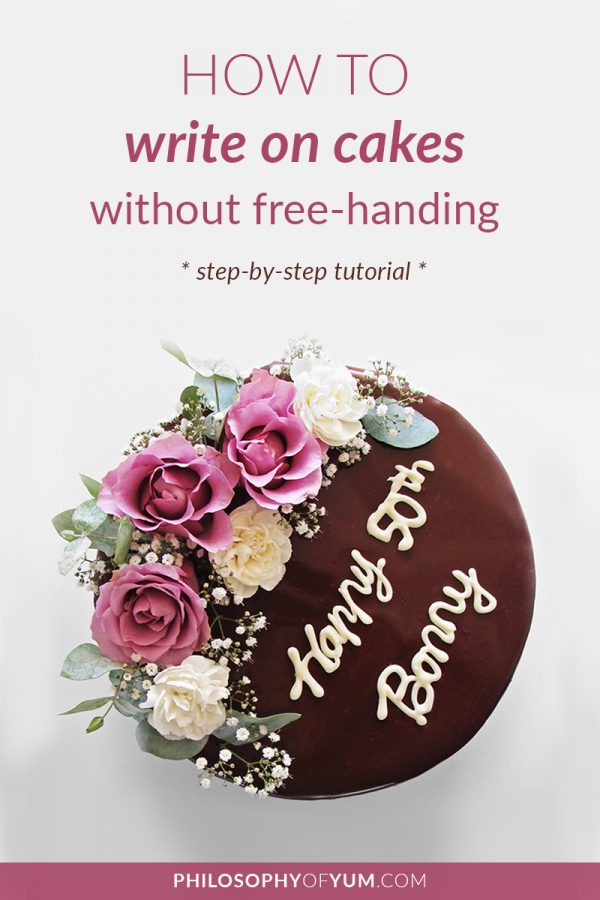
 

Struggling to pipe lettering on cakes? You're not alone! Here's a simple trick to help you out. Writing on Cake Without Free-Handing is simple and ideal for "non-decorators"! This step by step tutorial will teach you how to write beautiful messages in ANY font you want. #cakedecorating #cakedecoratingtips #cakedecoratingideas #homebaking #bakingtips


When you overheat chocolate, you break the structure of its crystallization – specifically the structure of the cocoa butter. Successfully tempered chocolate has optimal cocoa butter structure. When you overheat chocolate it basically means it won’t be stable – it will melt easily. It also won’t be shiny, but it will be dull or have blooming. And it won’t have a nice snap.

Click here if you want to read more on the polymorphic structure of chocolate.

The classic tempering with a marble slab allows you to overheat the chocolate and then bring it back to the right temperature on the marble slab with correct technique and experience. But it is difficult to master and super sensitive.

So don’t even go there! Why make life so difficult when it’s not necessary?

It’s far easier to just not overheat the chocolate in the first place and rather maintain the crystal structure it already has. Prevention is better than cure.


The best way to prevent chocolate from overheating comes down to three things:

  1. The container you melt your chocolate in. ALWAYS melt your chocolate in a PLASTIC BOWL. Ceramic, glass or aluminium bowls conduct heat FAR too easily and quickly. They also remain hot for a very long time. This will force up the temperature of your chocolate within 20 seconds – seriously..
    .
    PLASTIC BOWLS are poor heat conductors, so they do not become hot easily and they lose their heat very fast. The plastic bowl basically becomes “invisible” in the chocolate melting process, allowing the chocolate to melt at its own pace.
  2. The type of heat you apply. Although the bain-marie thing (bowl of chocolate over barely simmering water) is quite a standard way to melt chocolate – it’s not ideal. Sorry if I’m being controversial here, but it really isn’t ideal because it overheats the chocolate.
    .
    Firstly because you can’t place a plastic bowl over a bain-marie. It could melt the bowl and as we have established – plastic doesn’t conduct heat very well. Even if the water is barely steaming, it will still be enough to overheat your chocolate.
    .
    Chocolate melts with VERY LITTLE heat. It melts at 30°C/86°F! So the heat you use needs to be super subtle and above all – controllable!
    For this reason I like to use my microwave. I can control exactly how hot things get and stop it abruptly at any point I wish.
    .
  3. How long you apply the heat for. If you apply any source of heat for too long, your chocolate is going to overheat. For this reason it’s best to melt the chocolate with 30 second bursts in the microwave. Dark chocolate can take a bit longer to melt, but BE PATIENT! Stick to 30 second bursts!

    Take it out of the microwave after EVERY 30 second burst, squash and stir it a bit (even when it’s not melting yet) and then return to the micro for the next 30 second burst. I know it’s tempting to put it in there for longer, but don’t do it!

Now that you understand the science and super important basics, let’s move on to the FULL method: Writing on Cake without free-handing, from start to finish.


Writing on Cake Without Free Handing – Step by Step

IF you happened to skip to this part, go back up and read the full post. All the info above was shared with great reason. If you do not understand this whole process, the chances of you failing at this really increase drastically.


Create and Print Your Desired Template

  1. Measure the space you want to fill on top of your cake.
  2. On your computer, in Photoshop or Canva (free program), create a block a bit smaller than the measured size. A little bit smaller is always a good idea here.
  3. Choose a good font. Cursive is better here because the letters are all connected into one item. This means that “Birthday” becomes one item to transfer instead of 8 separate letters to transfer. My favourite font to use is “Dragon is Coming”! I downloaded it for free on dafont.com – click here.
  4. Type your desired message and print it on ordinary paper.
  5. Cut around your message to make the size of the paper smaller. Stick it onto the bottom of a cake tin base plate with some sticky tape. If the tin’s base has a lip, make sure it faces the bottom so that your top surface is completely smooth and level.
  6. Cut a square of NON-STICK, opaque baking paper/parchment (not wax paper) big enough to cover the writing. You should be able to see the writing through the baking paper. Make sure there are no bumps or kinks in the paper and that it is absolutely clean. Place it over the writing template and secure it in position with a few pieces of sticky tape.
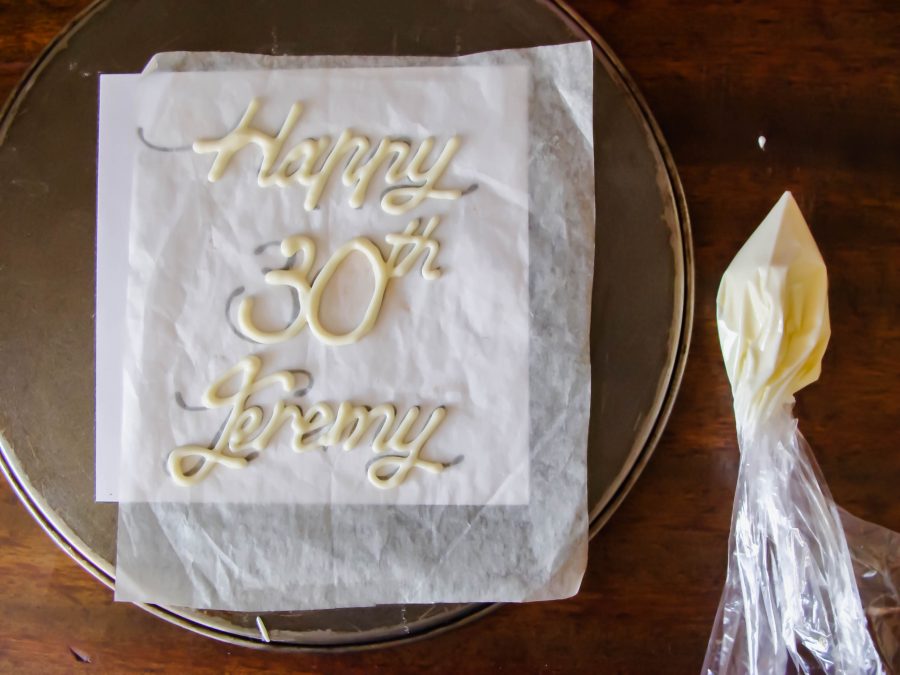
How to write beautiful lettering on cakes - without free-handing! Step by step tutorial


Temper the Chocolate

  1. Chop 50 g of your desired chocolate. There should be no pieces larger than 1 cm x 1 cm. SUPER IMPORTANT: Use TOP quality chocolate!! Commercial chocolate bars like Nestlé and Cadbury contain too much sugar and not enough cocoa butter, so they are always too soft and unstable. Lindt is always a safe bet.
  2. Place the chopped chocolate into a small PLASTIC bowl.
  3. Microwave in 30 second bursts. Dark chocolate can take a bit longer to melt, but BE PATIENT! Stick to one 30 second session at a time! Take it out of the microwave after EVERY 30 seconds, squash and stir it a bit (even when it’s not melting yet) and then return to the micro for the next 30 second burst. I know it’s tempting to put it in there for longer, but don’t do it!
  4. While you wait you can prepare your “piping bag”. Even though I have many piping bags, I prefer using a small, plastic sandwich bag for this (not Ziploc though. It gets in the way). Open it up and place it with one point facing down into a glass or cup. Fold the edges of the plastic bag over the side of the glass.
  5. When the chocolate BEGINS to melt reduce your next microwave session to 20 seconds. And now the next bit is crucial.
  6. THE TRICK TO GOOD TEMPERING IS TO MELT MOST, BUT NOT ALL OF THE CHOCOLATE IN THE MICROWAVE. The bits of melted chocolate may be enough to melt the rest of the chocolate pieces in the bowl, so stir and squash it thoroughly to see if the rest will melt. And keep tabs on the temperature of the chocolate by testing a bit of it on your lip. If it’s the same temperature or cooler you are on the right track. (If the temperature is warmer you have overheated it. Rather start again with new chocolate.)
  7. If the heat of the melted chocolate is not enough to melt the remaining solid pieces, return it to the microwave for 10 seconds at a time. Stir super thoroughly after each 10 seconds to see if the rest of the chocolate melts completely. YOU WANT THE LAST FEW PIECES TO MELT OUTSIDE THE MICROWAVE.
  8. Once everything is melted and smooth, stir the chocolate thoroughly another few times. Test the temperature again – it should be roughly the same temperature (or a little bit cooler) as your lip.
  9. Immediately scrape the melted chocolate into the prepared plastic baggie. Tempered chocolate does set quite quickly so you want to get it in the bag and close to your hand as soon as possible. The warmth from your hand will keep the chocolate melted.


Piping the Chocolate Lettering

  1. Twist the end of the baggie thoroughly (but not all the way up against the chocolate. You don’t want the melted chocolate to be under pressure and burst out when you snip off the end) and secure with a paper clip, clothes pin or anything you want. I mostly just keep the twisted end closed by pinching it in the space between my thumb and index finger while I’m piping (see image below).
  2. Snip off a tiny bit at the end. You can always snip off more. You can test to see how thick your line will be. The ideal line thickness is about 2 mm, but it’s totally up to you.
  3. Whenever you want to stop the flow of chocolate, just lift the tip of the baggie vertically upwards.
  4. Pipe the lettering with the melted chocolate while constantly keeping the side of your hand on the surface for some stability. Slide your hand on the surface as you move along. Do not let your hand hover in the air. I’m left handed, so I need to write the words backwards, starting from the right. If you’re right handed you can start from the left.
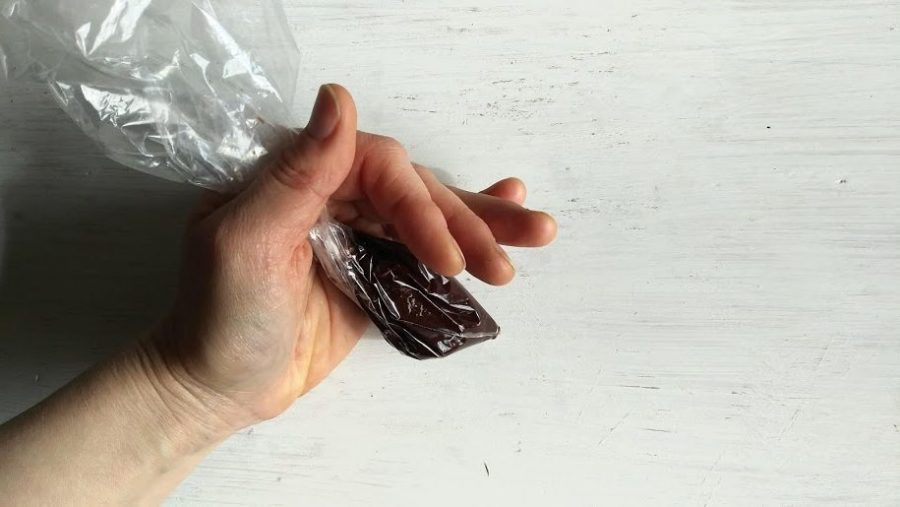
writing on cake without free-handing step by step tutorial


Transferring the Chocolate Lettering

  1. The chocolate will have begun to set once you are done piping the words, but allow the chocolate to set fully in the fridge for 5 minutes.
  2. Depending on how well you tempered the chocolate, this next bit could be super easy or a bit more difficult.
  3. The first thing you need to do now is loosen the lettering from the baking paper/parchment. Remove the sticky tape keeping the non-stick baking paper/parchment in place. Slide the parchment with the lettering on it to the edge of your work surface. Starting from the one side, grab the paper firmly on either side with your hands.
    Carefully slide the parchment over the edge, pulling the parchment down with your one hand
    . Go about 1 – 2 inches in. You obviously don’t want to crack the lettering or have it fall on the floor! Rotate the paper 90 degrees and repeat the process. Repeat for remaining two sides as well. Test with your clean and dry palette knife if the lettering is nice and loose on the paper.
  4. In my experience it it’s better to transfer the MIDDLE word first. Guessing the exact middle of your cake is much easier than guessing the top third. The middle is a great reference point.
  5. Carefully slide your clean and dry palette knife under a bit more than the top half of the word, keeping the bottom half unattached (see image below). Carry it over to your cake.
  6. Let the unattached bottom half make contact with the surface of the cake where you desire to place it. Allow it to ease off into position as you gently lift away the palette knife.
  7. Repeat with remaining lettering and then you’re done!!

writing on cake without free-handing step by step tutorial


This process might take around 3 attempts of practice before you are comfortable with it (especially with working through all my instructions), but then it’s so quick and easy!

I thought it best to rather explain as thoroughly as possible so that you have a great chance at success from the very first attempt! I know you can do it – you’ve got this!!

RELATED: How to Make Gorgeous Chocolate Shavings

If you use my method for writing on cake without free-handing, please let me know by tagging me @philosophyofyum because I would love to give you a virtual high ten 😀

Chat soon

Aurelia

Plan your Home/Micro Bakery in 1 afternoon. Download this free Home/Micro Bakery Business Plan template to start turning your passion for baking into an income.

Got a question? Something to add? Let’s chat in the comments section down below! (I respond to every single comment)

2K Shares
How to Make ANY Cake/Cupcake Recipe Gluten Free

How to Make ANY Cake/Cupcake Recipe Gluten Free

Make ANY Cake/Cupcake Recipe Gluten Free

Gluten Free Baking was such a challenging fete a few years ago, but today it’s a totally different story! There are so many gluten free flours available in most grocery stores nowadays.

And with the research of some amazing food bloggers like Art of Gluten Free Baking, Gluten Free on a Shoestring and more, gluten free ANYTHING is possible!

In my own Home Bakery, all my cakes and cupcakes are available in gluten free. This is not because I “saw a gap in the market” or anything, it’s rather because my husband, Adriaan, is highly intolerant to gluten.

I firmly believe that no home baker should try and sell anything they don’t believe in. Not so much because it’s inconsistent, but honestly, it just doesn’t work.

You can market products till you pass out, but if you don’t LOVE your products and really believe in the motivation behind baking them, you will literally not be able to sell them. Not nearly enough of them anyway.

There I go again, throwing in baking business advice. Back to the gluten free chat!


Gluten Free, But Also Lazy

The biggest problem I found with gluten free baking when I started exploring it, was that I needed to use a whole new recipe every time I wanted to bake something gluten free.

In other words, I couldn’t just use my favourite Carrot Cupcake Recipe, I had to go search for a gluten free carrot cupcake recipe – and even then there was no guarantee that the recipe would be up to scratch.

Having a Home Bakery is quite a high paced job, so I mostly memorize my recipes so that my baking process is much faster. The idea of memorizing DOUBLE the recipes because of a whole gluten free repertoire was just WAY too exhausting to even consider!!

I’ve quoted my wise (and unconventional) dad on this before in my How to Freeze Crème Pat post, but he always said:

“If you want to be lazy, you have to be clever!”

There simply had to be a gluten free flour blend you can sub into ANY regular cake or cupcake recipes.

On top of that, MANY gluten free cake recipes are severely annoying. They ask for these crazy ingredients which I’ve never seen before in my life and still have not found in any supermarket or health food store in my area.

Things like Ultratex, Expandex and Whey Protein Isolate… What?! Or should I say “Gezuntheid”?

Step by step instructions to help you make literally ANY cake or cupcake recipe Gluten Free. Includes recipe for the best gluten free cake flour you can make at home! No need to hunt for special, gluten free recipes anymore. Just your favourite recipes and substitute in this gluten free flour blend :) #glutenfreebaking #glutenfreecake #glutenfreeflour #glutenfreecupcakes

I’ve been on a mission to find something that could be made with ingredients that are available to me and can easily be mixed with no special equipment or effort.

So I came up with my own gluten free cake flour blend that has changed everything for my husband! I also started using this gluten free cake flour in my own bakery for all gluten free cakes and cupcakes. The POY gluten free flour blend yields such a soft and tender crumb!

And I love that I can find ALL of these ingredients in my closest health store/supermarket!

This gluten free flour can be substituted gram for gram in ANY cake and cupcake recipe!

I mix 1 kg of flour in a little sealed bucket and keep it in my cupboard to whip out whenever I need it. You are welcome to halve or quarter the recipe if you need to. I go by grams because the accuracy is just better when it comes to dry ingredients.


Not All Cake Recipes Are Created Equal

The worst mistake we can make as bakers is to assume that all cake and cupcake recipes should be treated the same way. I did a thorough post on Baking Perfect Cupcakes a while back where I also stress this fact.

Butter based recipes respond completely different to mixing than oil based recipes. Butter based cake/cupcake recipes can be overmixed so much faster than oil based recipes and this is amplified severely when you use gluten free flour.


Subbing With POY Gluten Free Flour Blend

I love to use my own gluten free flour blend because it works PERFECTLY in all cake and cupcake recipes.

And here’s a super important tip for the subbing process: Go By Weight and Not Volume!

I never, ever, EEEEVERRRR use cup measurements for dry ingredients. EVER. Wet ingredients, absolutely, but not dry ingredients. The reason why is because cup measurements leave way too much room for error. A loosely poured cup of flour weighs about 150 g, but a scooped cup of flour can weigh up to 190 g!

If a recipe does not provide weight measurements, I like to assume I should use 170 g per cup which is in the middle. This has always worked for me 🙂


Mixing Technique for Butter Based Recipes

Cream your butter and sugar as you normally would. Beat in the eggs and vanilla extract as you normally would.

When you add the gluten free flour (remember to use exactly the same weight as regular cake flour the recipe calls for) and milk/buttermilk, be careful how you stir and how much you stir.

Gluten free flour in butter based batters, gets overmixed really quickly. Overmixed gluten free cake batter will feel very stiff when you stir it and will result in small and tough cupcakes once baked.

For this reason, I incorporate my gluten free flour and milk/buttermilk on the slowest stir speed with my hand mixer – not with a stand mixer – for about 10 seconds which gives me more control and eliminates the danger of overmixing. If your hand mixer does not have a super slow stir speed, stir super gently, by hand, with a balloon whisk.

When I can’t see any more flour, I then go in with my rubber spatula. Use the spatula to scrape and fold all the eggy butter at the bottom of the bowl into the thicker batter on top. Keep folding gently and scraping the bowl till the batter looks uniform in texture.

Then you may proceed to fill your cupcake liners or cake pans. You can read more about perfect batter distributing techniques in my post Baking Perfect Cupcakes – Advanced Tips 🙂

Just remember to NEVER stir a butter based gluten free batter vigorously.

There are some butter based recipes out there that instruct you to beat the batter after the flour has been added. This is often done to give the cake’s texture a little bit more density and some chewiness. BUT, ignore this is you sub gluten free flour into the recipe. It just flops entirely and you end up with gluten free bricks that no one wants to eat.

(No weird ingredients!) Use this simple gluten free flour blend in all your favourite cake and cupcake recipes! No need to keep hunting endlessly for the ideal gluten free baking recipes. Just sub this gluten free cake flour in - gram for gram. #glutenfreeflour #glutenfreebaking #glutenfreecake #glutenfreecupcakes


Mixing Technique for Oil Based Recipes

Great news is that oil based batters are WAY more forgiving! Score! Whether you are mixing carrot cake, chocolate cake or red velvet cake, you don’t need to be as careful as you are with butter based gluten free batters.

This being said, I still wouldn’t mix it a lot unless the recipe states that you should do so. My Chocolate Cupcake Recipe, for example, requires you to mix the batter on medium speed for 2 minutes before adding boiling water. Since this is an oil based recipe, I do beat the batter for the required time even when I sub gluten free flour and they turn out great!


Baking Technique

When you sub POY Gluten Free Flour blend in a regular recipe, please note that your goods will bake a lot faster than when you use regular flour. It’s hard to say how much faster because it all depends on your oven. For me it’s usually about 10%-15% faster. Rather start testing your cake or cupcakes sooner to avoid over baking.


Subbing Beyond Cakes & Cupcakes

In our home we like to use this gluten free flour blend in Shortcrust Pastry, Cheesecake Pastry and Fresh Pasta too! It produces a gluten free pasta we can even roll out in our pasta machine – so rad!

Important note: This flour recipe is not ideal for making bread or brownies, but I do have an Ultimate Gluten Free Brownie Recipe.


If you have any more questions on substituting gluten free flour in regular cake/cupcake recipes, please comment below and I’ll be happy to answer them 🙂

Chat soon!

Aurelia 🙂

Plan your Home/Micro Bakery in 1 afternoon. Download this free Home/Micro Bakery Business Plan template to start turning your passion for baking into an income.

Got a question? Something to add? Let’s chat in the comments section down below! (I respond to every single comment)

211 Shares
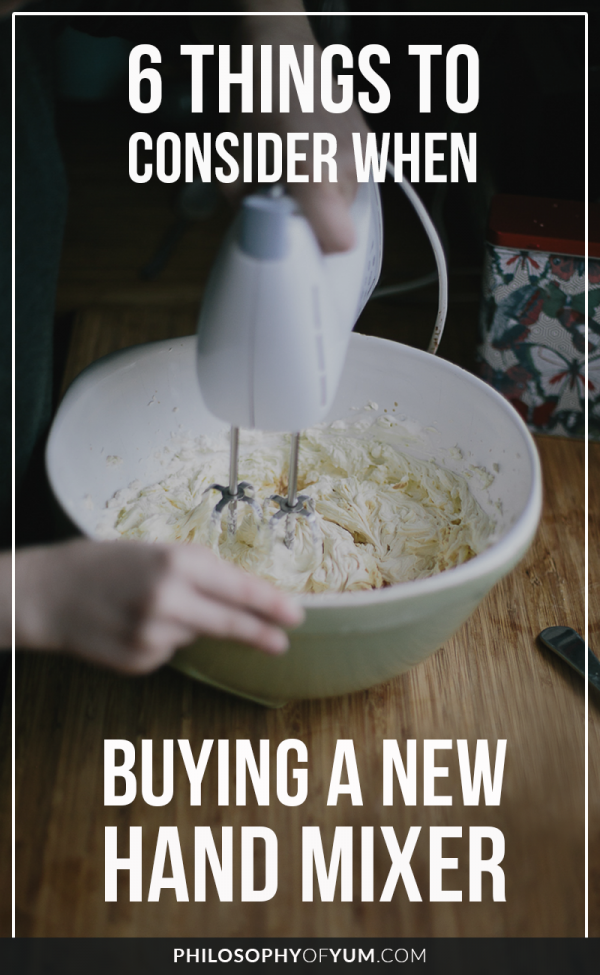
Electric Hand Mixer Shopping Guide – 6 PRO Tips!

Electric Hand Mixer Shopping Guide – 6 PRO Tips!

Electric Hand Mixer Shopping Guide – 6 PRO Tips!

A few years back I considered Standing Mixers to be the bee’s knees of baking appliances in the baking world…

To me, electric hand mixers felt like the poor unfortunate cousins of Standing Mixers that are constantly longing for the day they might evolve into standing mixers.

I thought “if I could just get a Standing Mixer, I will never need a Hand Mixer ever again!”, right?

Wrong!

Hand Mixers are LEGIT and there are some jobs that a Hand Mixer can do 10 times better than a standing mixer.

>> They give you so much control!

Another perk is that the tedious “scrape down the paddle & bowl” sessions are so much less with a hand mixer! I insist on making my Ultimate Chocolate Frosting with a hand mixer.

In a standing mixer it turns out lumpy and takes 3 times as long.

I’ve gone through my share of hand mixers as a full time baker. Some were amazing and some of them frustrated me a lot.

I’ve also decided to flex my I-actually-have-an-architecture-degree-and-can-draw muscles this week! Yay!

The sketches should help you understand what I mean. I hope you enjoy my little, super technical, super beautiful sketches. I’ve even framed them like the pro doodlers do these days.

*HINT* There’s a bonus tip #7 at the end of the post 😉

Please note: This post contains affiliate links, meaning I get a small commission if you end up buying one of these products – but it’s at no extra cost to you. I believe each one of them is the best value for money. I’m proud to recommend these tools to you because I know they’ll enhance your baking life at the most affordable rate possible.


Here are 6 key things to consider when you’re buying a Hand Mixer

baking tips | baking tips and tricks | hand mixer | kitchen equipment


1. The Base of the Hand Mixer

By this I mean the side of the Hand Mixer you put down on the counter when you’re not using it. If the base is too small, the Hand Mixer will keep toppling over time and time again! It can become blindingly frustrating.

Be sure to buy one that doesn’t have crazy curves or rounded edges toward the base. It’s best when the body shape of the mixer goes straight down into a completely flat surface.

Some designers often try to be cute and add a creative little arch below the base of the mixer. It’s so impractical. A slight variation from a completely flat surface might not have too drastic implications.

The best way is to test it.

Put the mixer on a flat surface and test its stability by pushing it with varied amounts of force. This is a technical way of saying “poke the mixer”! Lol! If it falls over easily, I would recommend that you keep shopping.

The stability of the base also includes the angle at which the power cord comes out of the hand mixer.

Might seem futile, but if the angle is too steep it compromises the stability of the mixer in a standing position. Make sure that the cord doesn’t interfere with the stability.


2. The Shape of the Beaters

Beater attachments are just beater attachments, right?

I’ve come to see that there’s a whole lot more to it!

My dear husband bought us a new fridge last year. He knew I was in dire need of a new hand mixer. I’m super particular about the appliances I buy and he knows this.

The sales lady at the appliance store highly recommended a Bosch Hand Mixer and made him an offer he couldn’t refuse.

I was so skeptical about his impulsive buy, but it’s turned out to be one of the best hand mixers I’ve ever had. It meets a lot of other criteria, but the main reason I love this hand mixer so much is because of the unique little twist in the beater attachments.

These boys whip things up in at least 30% less time! It’s amazing! I assume that the slight twist agitates the ingredients just that much more during beating, speeding up the creaming/whipping process.

This little edge has saved me so much time over the past year!

Please note that this feature is NOT essential, it’s just a super handy “nice to have”.

I know Bosch Hand Mixers aren’t available everywhere, so don’t worry too much if you can’t get one. There are plenty of other AMAZING hand mixers available! I’ll give you my verdict right at the end of the post 🙂


3. The Weight of the Hand Mixer

Have you ever made 7 minute frosting?

Or a batter that needs to be beaten for 5 minutes?

Even the lightest hand mixer can feel like lead after about 2 minutes.

On the flip side, it also doesn’t help if you get a super light Hand Mixer that falls over when you just look at it. I know I’m exaggerating, but we’ve all had an el-cheapo that falls over like 5-10 times a day.

Not fun.

Especially when there’s batter on the beaters and now it’s all over the counter. *Sigh of note!*

To me, the ideal weight of a hand mixer should be about 680 g (1,5 lbs) without any attachments. You can still go down to 650 g, but anything lighter than that becomes a bit too flimsy.

The weight of a hand mixer is not necessarily on the box, so be sure to take your scale with so that you can weigh it in the store! It may be nerdy, but it’s also kind of hard core when you think about it. Oh yeah. You know it.


4. Watts of the Hand Mixer

You get some powerful hand mixers on the market, but we’re not planning to use it to propel us across the ocean.

On the flipside, you do want a rather powerful mixer that will get the job done, and get it done well.

I recently watched a YouTube video by Cupcake Jemma where they reviewed different Standing Mixers. What an eye opener! Turns out higher watts does NOT mean it’s a higher quality mixer! Click here to watch the whole video.

The Watts refers to how much power goes INTO your mixer, not how much comes OUT! A lower watt mixer often means that the gears inside your hand mixer are of a higher quality, so they need LESS watts to operate.

So higher watts does NOT mean higher quality!

In my experience, 350 Watts is ideal for a hand mixer. But ultimately, it’s your decision here. 350 Watts has just worked the best for me so far.


5. Speed Settings of the Hand Mixer

A turbo speed option is not essential. My current hand mixer doesn’t have one and I honestly haven’t missed it for a second.

In fact it’s actually more important that the slow speeds on your mixer are in fact SLOW. I’ve had 2 hand mixers where the so called “slowest speed” was actually really fast! Try to test this in store if they allow you to.


6. Price of the Hand Mixer

Have you watched “Midnight in Paris”? Rachel McAdams’s mother says on a few occasions “You get what you pay for. Cheap is cheap!”.

I really don’t feel that’s true.

Some famous brands have these stunning hand mixers, but they are so heavy and unpractical. Very strange, but true.

Price does not equal quality when it comes to buying a hand mixer. Specs equal the quality of the hand mixer.


7. Spinning Direction of the Beaters

This point is super important. Generally, we beat things with a hand mixer to incorporate air. Thus it is KEY for the ingredients to be forced to work against gravity i.e. starting at the bottom and ending at the top.

For this to be accomplished, the spinning direction should spin from the inside out, forcing ingredients UP.

If the spinning direction is from the outside in, then the ingredients are being forced DOWN resulting in less air in the mixture.

What you hold the hand mixer out in front of you like a drill, you want the beater on the left to spin anti-clockwise and the beater on the right to spin clockwise.


Summary + My Recommended Hand Mixers

  1. Check the standing stability of the hand mixer you are considering. Do not compromise on this. Seriously. You can compromise on any of the other points, but not this one.
  2. Try to get a mixer with twisted beater attachments to save you whipping time. (This is not essential, it’s just a nice bonus)
  3. Higher Watts does NOT equal higher quality! Often lower Watts indicates better gears on the inside of sa hand mixer. 350 Watts is ideal in my experience.
  4. Get a hand mixer that isn’t too heavy. 680 g (1,5 lbs) is perfect.
  5. Don’t go for pretty, go for practical. You will use this hand mixer almost every day. Pretty is a bonus. Pretty hand mixers from famous brands will also cost you a whole lot more.
  6. Always read the specs of the appliance and decide according to that. Base your decision on the facts, not the brand name!
  7. Check the spinning direction of the beaters – it should be from the inside out.
  8. Don’t be too idealistic. Sometimes you’ll have to settle. What’s the best value you can get for your money? As long as your mixer has great standing stability, you should be fine.


Here are 3 options for hand mixers (each the best in their price range) to accommodate your budget:

BUDGET PRICE RANGE: Hamilton Beach 6 Speed Mixer (around US$20)


INTERMDIATE PRICE RANGE: Cuisinaid Hand Mixer (around US$40-$50)

Image Source: Amazon.com


PREMIUM PRICE RANGE: KitchenAid Cordless Hand Mixer (around US$100)

Image Source: Amazon.com


And that’s it!

I hope this post has shed some light on the process of buying a hand mixer.

Have fun when you whip out your digital scale in the store to weigh the prospective hand mixer. Make sure you are wearing shades at the time and playing “Bad to the Bone” in the background 😀

Chat soon

Aurelia 🙂

Plan your Home/Micro Bakery in 1 afternoon. Download this free Home/Micro Bakery Business Plan template to start turning your passion for baking into an income.

Got a question? Something to add? Let’s chat in the comments section down below! (I respond to every single comment)

28 Shares

Cheesecake Pastry Recipe – With 2 Flavour Variations!

Cheesecake Pastry Recipe – With 2 Flavour Variations!

Cheesecake Pastry

Cheesecake Pastry was not something I grew up with at all! Come on, we all mostly eat cookie crust cheesecakes – and they truly are fantastic! Who can ever manage to figure out if they like cheesecake’s crust or filling more?? BOTH are super delicious.

The slightly crunchy texture of the crust along with the flawlessly smooth cheesecake filling is the highlight of Dessert World.

BUT, did you know that Cheesecake Pastry was actually the original crust used by the clever Greeks and Romans? (Read more about the history of cheesecake).

Since they are generally considered as geniuses, I always knew deep down that cheesecake pastry might be something to look into.

Honestly, my decision to start making cheesecake with a cheesecake pastry base was due to the nature of my Home Bakery. I had to figure out how to make a crust sturdy enough to handle being moved over to a disposable cake board.

Crushed cookie bases are quick to prepare, but super difficult to transfer to a different dish, serving platter, cake board etc. Typically, you leave the cheesecake on the bottom of your spring-form cake tin and use it as a “cake board”.

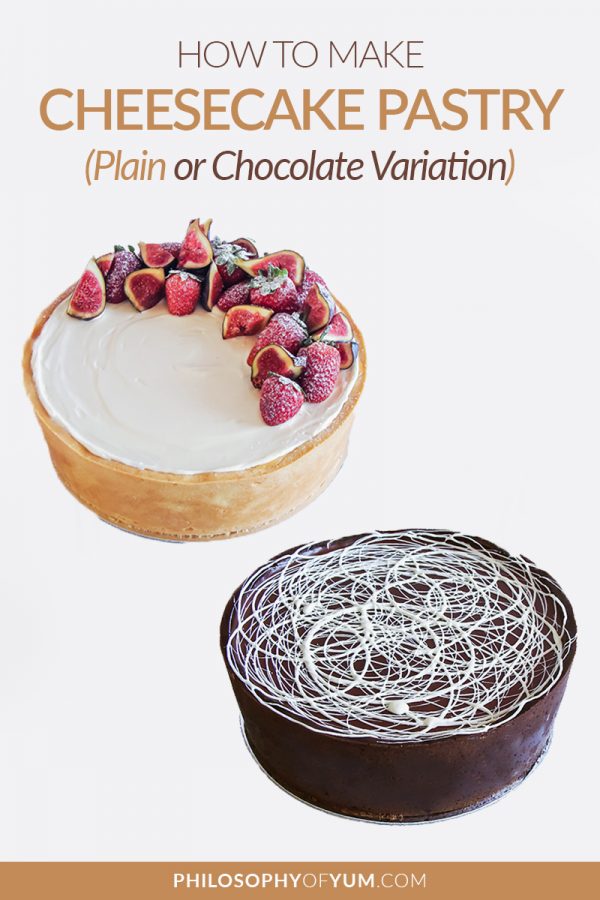
cheesecake pastry recipe plain or chocolate

Problem with this idea is that I can’t exactly expect my clients to return my cake tin’s bottom. Too tedious for them and me. Cheesecake Pastry is much sturdier and still contains gorgeous butter, so you aren’t missing anything!

What Makes Cheesecake Pastry Different?

There are a few differences between cheesecake pastry and regular shortcrust pastry. Cheesecake pastry typically contains more egg, because egg is a great binding agent. It provides extra strength and stability to the pastry.

I would even go so far as to say it provides a small amount of elasticity. Shortcrust pastry, in my opinion, needs to pretty much have the texture of shortbread. I did a very thorough post on Shortcrust Pastry earlier this year.

It might be a bit unorthodox, but I like to add vanilla extract to my cheesecake pastry instead of water. It really bumps up the flavour and compliments the cheesecake so beautifully!

Perks of Using Cheesecake Pastry

  • The biggest perk for me is that it protects the cheesecake during baking. It COMPLETELY eliminates the risk for over-cooked/browned/curdled edges around the cheesecake.
  • It keeps the cheesecake moister during baking since the delicate cheesecake filling never touches the hot and dehydrating aluminium sides of the tin.
  • As I mentioned before, it makes the finished cheesecake a BREEZE to transfer onto a cake board or cake stand without lending out your tin’s bottom.
  • It really is super delicious! Since I’ve switched to cheesecake pastry, I’ve never had the desire to go back to crushed cookie bases.
  • It is really not difficult at all! In a food processor, it really takes like 5 minutes. I’m going to give you step by step instructions so that you can also make your own cheesecake pastry!

*SUPER IMPORTANT!! Before you make this Cheesecake Pastry and proceed with making a Baked Cheesecake, I strongly urge you to read my post PERFECT BAKED CHEESECAKE | THE ULTIMATE GUIDE.

Cheesecake Pastry - easy and super delicious! VANILLA or CHOCOLATE Cheesecake Pastry variations available to compliment your favourite cheesecake recipe. #bakedcheesecake #cheesecakepastry #cheesecakerecipe

5.0 from 1 reviews
Cheesecake Pastry - Plain or Chocolate
 
Prep time
Cook time
Total time
 
Author:
Serves: 9 inch base
Ingredients
  • 230 g All-purpose Flour (sub 40 g cocoa if making chocolate pastry)
  • 75 g Pure Icing Sugar
  • 130 g Salted Butter, cold and cubed
  • 50 g Free-range Egg Yolks (2 egg yolks + 10g of whole beaten egg)
  • ½ Tbsp Vanilla Extract
Instructions
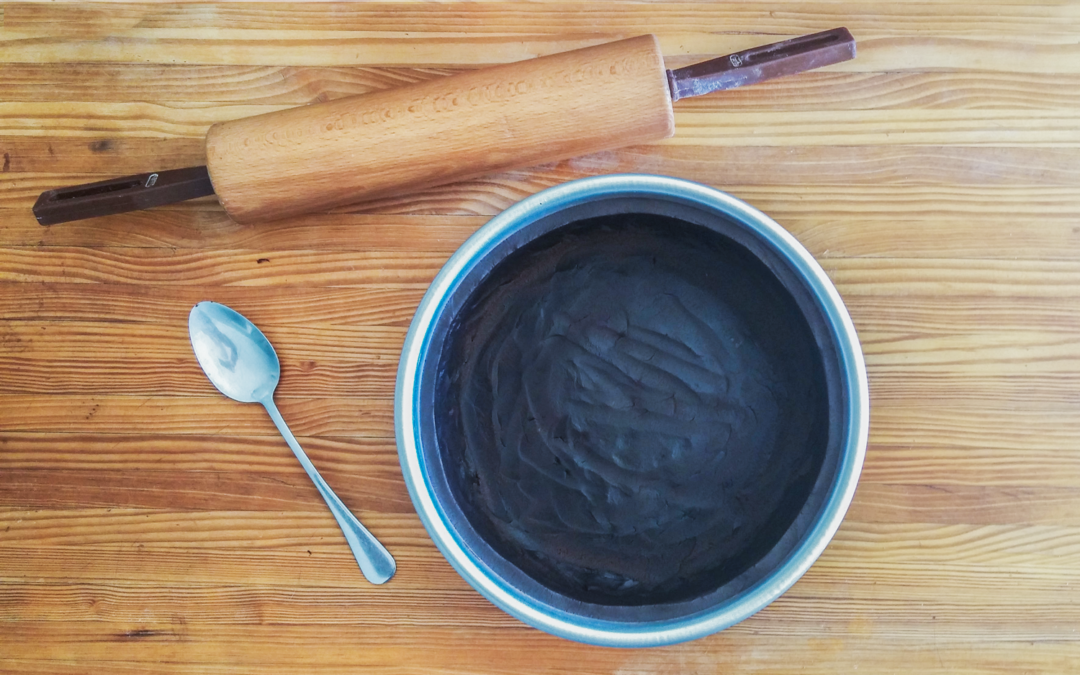
  1. Place flour (and cocoa powder if making choc pastry) in a food processor. Cut the butter into a 1 cm dice and add to the food processor. Try to distribute the cubes of butter evenly in the flour so that they don’t stick together.
  2. Process on high speed until resembling even bread crumbs.
  3. Add icing sugar and process for about 10 seconds on high speed.
  4. Add the egg yolks and vanilla. Process on high speed for about 15 seconds. The pastry will not form a ball inside the processor.
  5. cheesecake pastry process
  6. Pour the crumbly mixture onto a work surface – do not add any extra liquid! Press all the crumbs together and press the pastry together till more or less smooth. This should take only about 3 minutes. Form the pastry into a ball and squash it flat to about 1cm thick - this helps it to chill faster.
  7. Wrap the pastry in cling wrap and refrigerate it for 15 minutes.
  8. Cut a 30 cm x 30 cm square of non-stick parchment paper. Place the chilled pastry on the paper and roll out with a lightly floured rolling pin to an EVEN 3mm thickness, roughly in a circular shape. The parchment paper makes it super easy to turn the pastry when rolling!
  9. Spray/butter the inside of your 9 inch (22,5 cm) tin. Place the loose bottom face side down onto the pastry. Cut around the sides of the tin’s bottom and also at 12, 3, 6 and 9 o’clock to divide the excess pastry into 4 strips.
  10. Remove the strips one by one and place to one side. Press down on the tin’s bottom so that the pastry squishes out slightly underneath. I find this little lip of pastry helps to combine the pastry on the sides with the pastry on the bottom.
  11. Flip the parchment paper and tin’s bottom. Peel away the paper.
  12. Drop your tin’s bottom back into your tin and fill in the sides of the tin with your pastry strips using your fingers. Do not worry about a smooth finish just yet.
  13. Preheat your oven to 180ᵒC/350ᵒF.
  14. Place your tin in the freezer for 5 minutes. Remove from freezer and smooth the edges and bottom with a metal spoon. Return to freezer for a further 10 minutes or until frozen solid.
  15. Cut a large piece of heavy weight foil (enough to line the bottom AND go up and over the sides.) Spray the dull side of the foil with non-stick cooking spray. Smooth the greased side of the foil directly onto the pastry. Leave no pastry exposed. Be sure to press the foil down very snugly into the corners of the cheesecake pastry. Run your finger over the top edge as well to maintain the shape of the pastry during baking.
  16. Fill the cavity with dry baking beans (I prefer rice).
  17. Bake one notch below the center of your oven for 35 minutes, turning after 15 minutes.
  18. Remove from the oven and leave to stand (with foil and rice still inside) for 10 minutes.
  19. Remove the foil and rice and proceed to fill with cheesecake filling. Bake again for as long as your cheesecake recipe states.

I trust that these simple an thorough steps will enable you to make your own amazing cheesecake pastry! Please let me know how you get on by using #philosophyofyum or even tagging me @philosophyofyum.

If you’re into Cheesecake you’ll love these related posts:

Perfect Baked Cheesecake | The Ultimate Guide!

Perfect Vanilla Baked Cheesecake Recipe

Chocolate Swirl Baked Cheesecake Recipe

Chat soon!

Aurelia

Plan your Home/Micro Bakery in 1 afternoon. Download this free Home/Micro Bakery Business Plan template to start turning your passion for baking into an income.

Got a question? Something to add? Let’s chat in the comments section down below! (I respond to every single comment)

52 Shares
Perfect Baked Cheesecake | The Ultimate Guide!

Perfect Baked Cheesecake | The Ultimate Guide!

How to Make Perfect Baked Cheesecake

Perfect Baked Cheesecake can make any horrible day suddenly seem like the BEST day of your life… It’s powerful stuff!

Unfortunately, there’s an intense and unnecessary hype over how difficult it is to bake a perfect cheesecake. I was absolutely petrified of making baked cheesecake for yeeeeears.

The ingredients are also very expensive, so if the cheesecake flops then you don’t only feel like a failure, but are also broke as well. Too much risk man.

Cooking and baking shows also just LOVE showing us the drama of cheesecake, don’t they?

Drama sells. Do yourself a favour – keep in mind that those contestants are under enormous TIME constraints and pressure to perform. That is an ideal recipe for drama and disaster, which the networks need to make the shows sell.

But I want to encourage you today and put your mind at ease… 

It’s actually very simple and 100% possible to bake a perfect cheesecake. ESPECIALLY at home! There is NO reason to be afraid – truly.

So breathe in deeply, muster up some hope and take courage. Now smile! I promise you that I will help you to master this technical dessert and bake the perfect cheesecake on your next attempt.

Before you run off to turn the oven on, just wait a second.

This post (part 1/4) is all about the technical aspects of baking the perfect cheesecake. You may know by now that I am a HUGE believer in METHOD, because it gives us perfect bakes.

Examples of my utter obsession with method: How to Bake Perfect Cupcakes – FULL TroubleshootingHow to Bake Perfect Cupcakes – Advanced Tips, How to Bake Perfectly Level Cake Layers.

I’m laying a foundation here so that you will know exactly what to do when I share my perfect cheesecake recipes in the next 3 posts.

So get yourself a cup of tea and absorb all these tips and tricks I’m sharing with you today.

*HINT* THERE IS ALSO A BONUS CHEAT TIP #7 RIGHT AT THE END OF THE POST THAT WILL MAKE YOUR CHEESECAKE BAKING A WHOLE LOT EASIER!


My 6 TOP Tips for Perfect Baked Cheesecake:

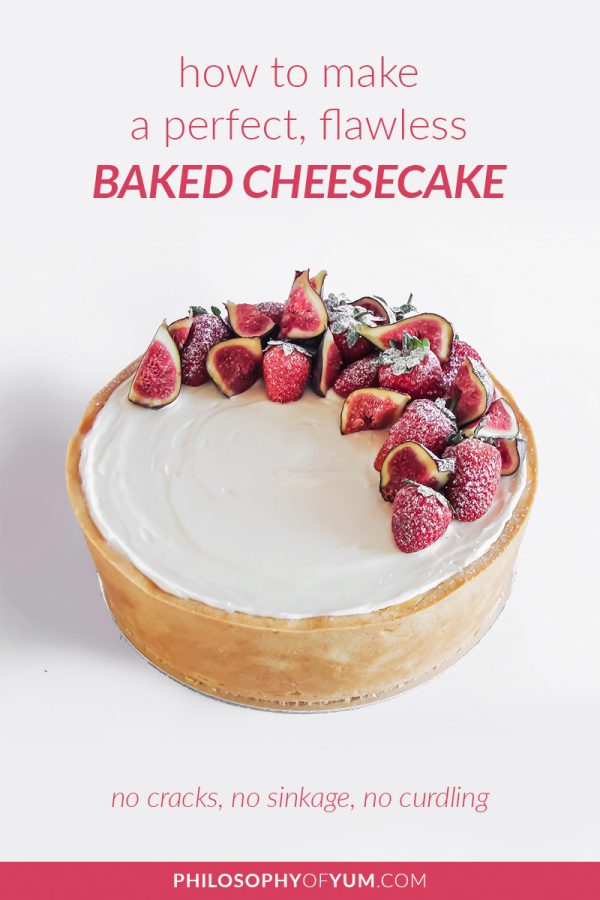
The Ultimate Guide to PERFECT Baked Cheesecake gives you ALL the help you need to bake perfect cheesecake at home. We discuss all the causes and prevention of cracking, sinking, under-baking, over-baking etc. After reading this post you should have NO fear to make your own perfect baked cheesecake. #cheesecake #bakingtips #bakedcheesecake #cheesecakerecipe

1. Take your Time:

I’ve watched so many seasons of The Great British Bake Off on which the contestants must always bake cheesecake at some point.

My favourite baking show cheesecake episode is however from The Great Australian Bake Off S1-E6. So shocking that they only had 2,5 hours to make it though!

If you rush yourself to make a perfect cheesecake, I can guarantee that a whole lot of things will go wrong!

Cheesecake is like good American BBQ – LOW AND SLOW.

I actually LOVE the fact that cheesecake takes such a long time to bake. My recipe typically bakes for 1 hour, then I turn it and bake it for another 40 minutes.

That gives you two massive brackets of time to do something else while the lazy cheesecake just hangs out in the oven.

It might be a tad irresponsible, but I’ve gone grocery shopping so many times while the cheesecake is baking. Who has time to watch a cheesecake bake? It would probably take less time to watch paint dry.

So to clarify; perfect cheesecake takes a long time to make yes, but 75% of it is PASSIVE time in which you can do something else. Don’t let the long baking time put you off making it.


2. Room Temperature Ingredients:

If your ingredients are not at room temperature, they will struggle to combine into a smooth batter. Perfect cheesecake is made with room temperature ingredients.

Cream cheese can be especially difficult to smooth out when it is cold because of its higher fat content. Butter, for example, is solid fat. Have you ever tried creaming ice-cold butter? Impossible.

Also be sure to use room temperature eggs.

If I am being honest, I always use the cream/sour cream straight from the fridge because I don’t want it to go off while standing at room temperature. But room temperature cream cheese and eggs are essential.


3. The Bain Marie Situation:

Bain Marie means “Marie’s bath”, but in the baking world it just means “water bath”. A water bath is absolutely essential to baking a perfect cheesecake. It ensures a moist cheesecake and helps it to bake gently and evenly.

But the traditional method of bain marie baking is so superlatively tedious

Wrapping 2 layers of foil around the cake tin AND then placing it in a glass dish AND pouring boiling water around it AND burning yourself when trying to turn the cheesecake halfway through baking it AND then it leaks.

I mean, there are posts just on managing the leaking. TOO TEDIOUS and hazardous. No thanks. Remember, I am a lazy person who loves to make perfect bakes, so I had to find a simpler way.

Ashlee Marie is the fantastic human who presented an alternative. You seriously get the exact same effect if you just place a separate pan of hot water in the oven with the cheesecake. SO much easier and more practical – thank you Ashlee Marie!

  • I like to use the biggest roasting tray I have.
  • Place it in the lower half of your oven before you bake the cheesecake so that it gets nice and hot during the preheating.
  • Boil at least 2 liters of water in a kettle.
  • Place your cheesecake in the middle of your oven.
  • Pull the empty roasting tray out slightly and fill it up with the just-boiled water. This will create a nice cloud of steam to fill the oven right from the start without burning your arms.

Now that you have this super easy cheat bain marie method for baking perfect cheesecake, don’t let it frighten you off either!


4. How to Avoid the Dreaded Sinking:

Low and Slow applies not only to the baking of the cheesecake, but also the MIXING. Especially if you will be making mini cheesecakes.

Mini cheesecakes will completely expose your mixing method. Tip number 3 is ALL about the mixing.

How to bake flawless baked cheesecake at home! Learn all the tricks and causes behind shrinking, sinking, cracked baked cheesecake. You'll never have to deal with these problems again. Click through to start mastering baked cheesecake today :) #cheesecake #cheesecaketips #bakingtips #perfectcheesecake

The KEY thing during the mixing phase is not to whip in ANY air. If you do not have a stand mixer with a paddle attachment, make it by hand – seriously. Do not bring a hand mixer anywhere near your cheesecake batter!

  • Add the soft, room temperature cream cheese to the mixing bowl. Beat it on medium low speed till smooth.
  • Add in the sugar. Beat it on medium low speed for 30 seconds. Let it stand for 5 minutes so that the sugar can melt. Beat it on medium low speed again for 30 seconds till smooth. Don’t rush it and beat it on high speed. Ever. At any point.
  • Scrape down the sides and bottom of your bowl thoroughly and mix again on medium low speed.

And now the eggs.

  • I like to crack the eggs in a separate bowl and lightly mix them together so that the yolks break and are easier to incorporate into the cream cheese.
  • FROM HERE ON OUT ONLY MIX ON YOUR MIXER’S LOWEST SPEED.
  • Add the egg in in 4 sessions. Don’t watch it the whole time, you will be SO tempted to increase the speed. It is a great opportunity to spend some time on pinterest or learn a language on the Duo Lingo App (I’ve become 7% more fluent in French, just from cheesecake mixing time! Haha!).
  • Before mixing in the last egg, scrape down the sides and bottom of your bowl thoroughly and mix again on lowest speed.

I like to stir in the cream/sour cream by hand because the mixer takes forever to incorporate the liquid.

If you follow the low and slow mixing method, I guarantee that your cheesecake will come out perfect and not sink a bit!


5. How to Tell when a Cheesecake is Done:

A perfect cheesecake has to be just set. Not under baked and saggy, or over-baked and slightly coarse. So HOW do you know when it’s done?

First of all, bake your cheesecake on the regular bake setting of your oven (solid stripe top and solid stripe bottom). Do NOT use a thermo-fan or convection oven.

Now the testing. Some swear by the jiggle or “wibble-wobble” test. Honestly it is a bit vague to me. I can never really tell if it’s done by how much it wobbles. Monique ended up under baking her cheesecake, and so have I, with the jiggle test.

The easiest way for me to tell is looking at the surface. The edges should have puffed up a bit and be dull, but the center circle (about 8cm in diameter) should still be shiny.

The jiggle test is a handy second option for me. The cheesecake should have a stiff jiggle and move as one unit. If the centre still keeps moving after the outer edges have stopped, then it’s NOT done yet. Wait another 10 minutes and check again.

As soon as the outer rim of the cheesecake breaks loose from the side of the tin (or pastry), you’ve gone a bit too far. If the cheesecake browns on top, you have definitely taken it WAY too far.

It will still be tasty, but it will be a tiny bit grainy, drier and not as creamy.

There are also some fancy thermometer tests you can use if you like.


6. How to Avoid the Dreaded Cracking:

A cracked cheesecake can happen as a result of your mixing, but more often than not it is because of your baking and/or cooling. A baked cheesecake is like my husband in winter… If you suddenly pull the duvet off him in the freezing morning hours, he WILL crack.

Cheesecake has a sensitive soul. Respect that and all will be well. For this reason, it needs to be cooled very gently and gradually.

  • When baking, let the cheesecake bake in peace for at least one hour before opening the door and turning it or checking it.
  • As soon as my cheesecake is perfectly baked, I turn the oven off and leave the door closed for 5 minutes.
  • Then I leave the oven door ajar. Let the cheesecake hang out in the (switched off) oven for another 90 minutes to be safe.
  • Remove it from the oven and let it rest on the kitchen counter for 1 hour.
  • You may now place it in the fridge overnight for the cheesecake to fully set and get a perfect texture.

Cool your cheesecake gradually if you want it to be perfect and crack free. There is no way around this. And besides, it is once again PASSIVE time. You can do other things while it cools!


7. BONUS TIP – Time Saver:

I NEVER remember to take the cream cheese out of the fridge in time. The quickest way to bring it up to room temperature is by defrosting it in the microwave! Yes, I know it’s not “frozen”, but the defrost setting warms up the cream cheese VERY gently and slowly. Yet again – low and slow.

  • Don’t use the quick defrost setting though, which is too intense. Auto defrost for meat is perfect.
  • I let it run for 2 minutes at a time. The cream cheese usually needs 2 sessions of minutes each to reach room temperature.
  • If you can press your finger in to the cream cheese with ease, then it’s ready. Obviously feel the temperature of the cream cheese as well. If you can’t really feel it, it means it should be around body temperature which is perfect.

If your eggs are cold too, simply place them in a bowl of lukewarm water for 10 minutes. Tada!

This is the Part Where I Motivate You:

Put your hands on your heart and repeat after me:

I CAN BAKE A PERFECT CHEESECAKE!

I NOW HAVE NO EXCUSE TO AVOID BAKING CHEESECAKE!

I DESERVE TO BAKE AND EAT A PERFECT CHEESECAKE!

cheesecake | baked cheesecake | cheesecake tips


Okay, consider yourself motivated and fearless! These tips for perfect cheesecake will help you to get a perfect bake on your favourite cheesecake recipes.


In the next 3 posts I’ve shared my own Home Bakery’s recipes for perfect baked cheesecake that I make all the time…

  1. First there’s my Cheesecake Pastry Recipe (includes chocolate variation) and Walk-Through.
  2. Then my Chocolate Swirl Baked Cheesecake recipe,
  3. and lastly my Vanilla Baked Cheesecake recipe!

Here are some links to other baked cheesecake posts that I found useful in my years as a professional home baker. Thank you to these authors and bloggers for your research! Ashlee Marie, Prepared Pantry, The Kitchn, All Recipes, The Spruce, Simply Recipes

Now go make that cheesecake!

Chat soon,

Aurelia 🙂

Plan your Home/Micro Bakery in 1 afternoon. Download this free Home/Micro Bakery Business Plan template to start turning your passion for baking into an income.

Got a question? Something to add? Let’s chat in the comments section down below! (I respond to every single comment)
131 Shares

X