How to Freeze Custard (Creme Patissiere) and Restore It

How to Freeze Custard (Creme Patissiere) and Restore It

How to Freeze Custard and Restore It

Freeze custard and restore it in just 5 minutes – it’s so quick and simple! Normally, freezing custard/creme patissiere is an absolute NO-NO in the baking and pastry world. All info online clearly states that you cannot freeze custard/creme patissiere because it splits into oblivion. And it does.

But I’m here to tell you that you can FULLY restore thawed/defrosted watery custard! YAY! 😀

Context

I’ve been developing a recipe for a super exciting brownie (which I will share in the future) which requires creme patissiere. Not knowing how much custard  I would need, I made the whole recipe and ended up with about 2,5 cups of it. After using only half a cup for my experimental brownies, I still had 2 cups left!

Of course I wouldn’t let the rest just sit in the fridge and go to waste. Without googling at all (which is quite unlike me) or thinking twice, I just popped the custard in the freezer.


Current Info on Freezing Custard

According to the whole web (cooking.stackexchange.com, thekitchn.com, nigella.com, chowhound.com, forums.egullet.org just to name 5) homemade custard should never be frozen as is and used again later. Apparently the best method to at least avoid waste is to make “frozen custard” aka ice cream! This requires a bit of effort though.

Once in the freezer, you need to whisk the custard every 30 minutes for 3 hours. This aerates the custard and keeps it smooth during the freezing process. The result is beautifully smooth frozen custard.

BUT, they all say you cannot freeze custard, thaw/defrost the custard and then use it again as custard due to the severe separation that cannot be rectified.

Unfortunately I only read all this info after my custard had been in the freezer for 3 weeks already! I left it on the counter to defrost for a few hours. It was a watery MESSSSS. I really did not expect this, but since I hate wasting, I was not going to throw it away.

Although it may not always seem so, I suffer from selective, slightly-above-moderate laziness. I go to extreme and labour intensive measures to achieve a “yum-high” in my cooking and baking, but for some things I just cannot be bothered.

I’m definitely not going to make creme patissiere 3 times a week. I’m also definitely not going to divide a single egg yolk in 3 so that I can make 100 ml of creme pat! There had to be a way to freeze custard and restore it.

My dad has this incredible line I’ve been quoting for years: “If you want to be lazy, you have to be clever.” So I put on my thinking cap…


The Science of Freezing Custard

I did a post a while back on how to fix and prevent chocolate ganache that has split. Both ganache and custard split when frozen. The ingredients are still 100% tasty, but the texture has transmuted completely. In one case it is the fat that separates and in the other case it is water.

Although ganache and custard are completely different, I firmly believed that their restoration processes would be very similar.

I decided to apply the same process I use on thawed ganache. Step one was to heat it on the lowest possible heat in a saucepan while stirring occasionally with a balloon whisk. It became looser, but was still very much grainy with a watery residue.

At that point I realized that custard is typically cooked at a much higher (boiling in fact) temperature. I upped the heat one setting higher. It started looking much better.

Another trick that works to re-emulsify split ganache, is adding warm milk. I heated 1 tablespoon of milk in the microwave and proceeded to whisk it into the warm custard.

After whisking a bit more vigorously (still with a balloon whisk) for about 10-15 seconds it smoothed out TO PERFECTION!!! SO rad! 😀

I got so excited! There was still a big concern that it just looked smooth, but upon tasting it I would end up writing that “the restored custard is 95% smooth!”. Not the case. At all. It is seriously 100% smooth! It tastes, looks and feels freshly made. Can’t believe it!


Method Recap

How to Freeze Custard

>> Put your left over creme patissiere / custard in a freezable cotainer.

>> Place in freezer.

Have some coffee, you’ve worked hard.

How to Thaw/Defrost Custard

>> Remove custard from the freezer and leave out on the counter to defrost for 3-4 hours.

Have some coffee, you’ve worked hard.

I wouldn’t recommend defrosting in a microwave for longer than 2 minutes. You may do that to get it going, but longer than that will start overcooking some parts of the custard. You can also place the sealed container in some warm water to speed up the process if you are in a hurry.

How to RESTORE Thawed/Defrosted Custard

>> Place the split custard in a heavy based saucepan (all of it, including the separated water).

>> Turn on the stove to the lowest possible setting. Stir the custard with a balloon whisk every 30 seconds so that it heats evenly and doesn’t catch on the bottom.

>> When the custard is warm to the touch, turn up the heat a bit more. Stir occasionally for about 2 minutes while it keeps heating up.

>> Heat 1 Tbsp Milk (I used 4,5% fat whole milk) in the microwave for 20 seconds. Use 1 Tbsp Milk for every 200 g of thawed custard.

>> Add the warm milk to the saucepan. Keep whisking the custard on the stove for another minute till it smooths out and comes together again. Take it off the heat before it starts to simmer/boil. Taste a tiny bit to make sure it is fully smooth.

Now you should have coffee AND a pastry covered in your amazing freshly made (thawed) custard 😉

Please let me know if you give this hack a go. Save yourself a mountain of effort and waste! Freeze custard and restore it because now you CAN!

Freeze custard and restore it in just 5 minutes - it's so quick and simple! Normally, freezing custard/crème patissiere is an absolute NO-NO in the baking and pastry world. All info online clearly states that you cannot freeze custard/creme patissiere because it splits into oblivion. And it does. But I'm here to tell you that you can FULLY restore thawed/defrosted watery custard! YAY! #bakingtips #homebaking #baking #cremepat


Thanks for reading!

Chat soon!

Aurelia 🙂

Plan your Home/Micro Bakery in 1 afternoon. Download this free Home/Micro Bakery Business Plan template to start turning your passion for baking into an income.

Got a question? Something to add? Let’s chat in the comments section down below! (I respond to every single comment)

333 Shares
How to Make Chocolate Shavings

How to Make Chocolate Shavings

How to Make Gorgeous Chocolate Shavings

Chocolate shavings were basically the first decorative thing I could associate with. In my first few years of baking the term “cake decorating” always scared me off.

It seemed like this super fancy skill which you can only acquire through years of studying and practice.

On top of all that I could not reach equilibrium in my mind over fondant and gum paste… I didn’t like them at all because they have NO FLAVOUR whatsoever, but it seemed like those are the only materials to use in cake decorating.

Should I give in? I guess it is okay that gum paste decorations are flavourless… isn’t it?

For me, the main reason I add anything to a cake is because it contributes to the flavour – a very honest and bare approach. And that’s me in a nutshell; I cannot pretend to save my life.

This meant I had to find a way to decorate cakes in an honest fashion. The simplest answer was this…

Quality Ingredients as Decorations

Taking an ingredient that is inside the cake already and presenting it in a beautiful way on top of the cake. To me the final product is incredibly inviting.

Beautiful chocolate curls and fresh berries call out to my taste buds, but silver deco balls just don’t get my mouth watering (anyone else feel the same way?).

If gum paste and fondant works for you in your cake decorating, that’s wonderful. We all have to discover what materials work for us and best represent, and express, us as creatives.

I am an honest purist at heart so if I approach cake decorating in the same way, I am way more likely to create a stunning product I am proud of and feel comfortable with.

Over the past 5 years I’ve discovered some nifty tricks to make cakes & cupcakes look spectacular in a matter of 5 minutes just by using ingredients to decorate my cakes.

It makes so much sense to me and the end result can hold its own next to a fondant cake any day 🙂 I would define my cake decorating style as “Purist Cake Decorating”.

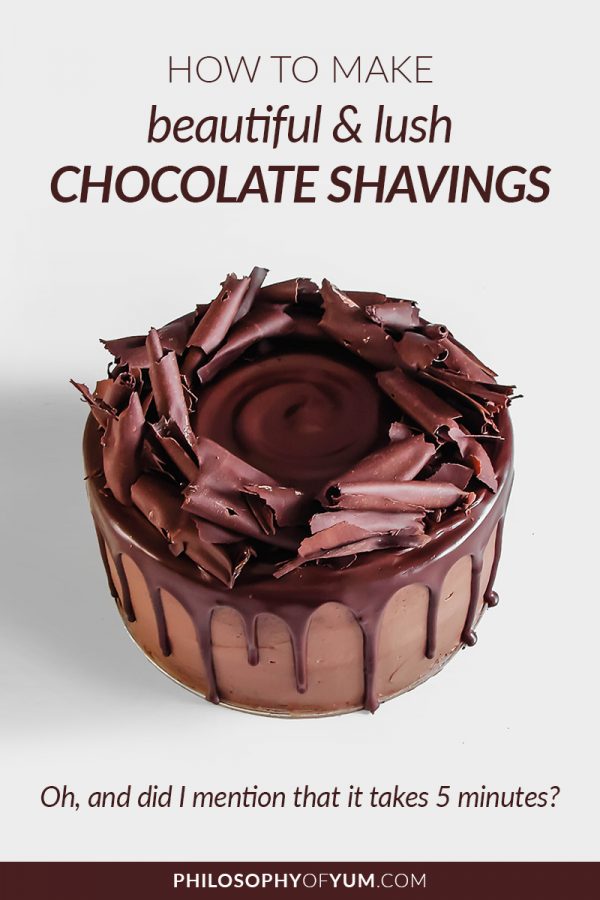
Make your own luscious chocolate shavings in 5 minutes! I use this method DAILY for giving my cakes a professional edge. With these chocolate shavings I decorate cakes, cupcakes and tarts. Minimum effort for maximum results - EASY cake decorating at its best! #cakedecorating #chocolatedecorations #cakedecoratingtips #cakedecoratingideas


Isn’t it Hard to Make Chocolate Shavings?!

Please don’t panic! You don’t need amazing skills to do this. I don’t have any qualifications in working with chocolate, but just figured things out as I went along.

This technique is super easy and quick, I promise! And the finish is just so beautiful. It immediately adds a professional edge to your cakes!

The technique for making chocolate shavings is simple in principle. Very simple. It comes down to pressing and dragging a knife over chocolate.

First place I saw this technique was on The Naked Chef (I NEVER missed an episode).

Jamie was decorating a chocolate tart or something and in seconds he made these stunning chocolate shavings that made his homemade tart look like a centerpiece in a French Bakery!

RELATED: How to Write on Cake Without Free-Handing

What I love about this technique is that you just use an ordinary bar of dark chocolate to make them.

No need to fuss about with baking sheets and vegetable shortening which is the case when making proper chocolate curls. No thanks, too much effort.

Only problem is that these regular chocolate shavings can often seem a bit skimpy.

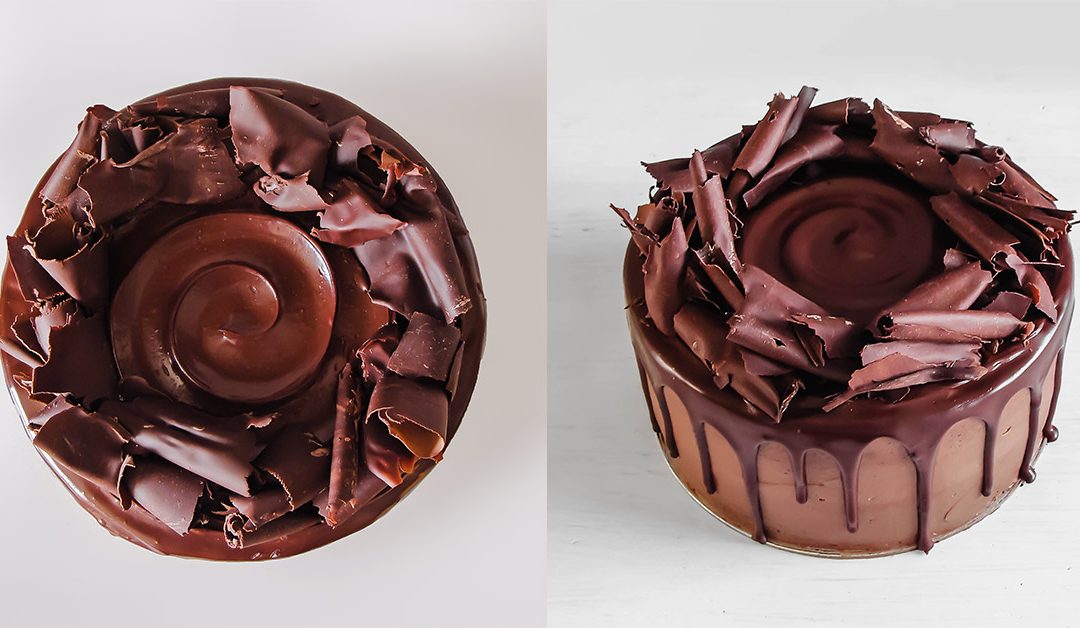
I’ve discovered a few hacks however that end up giving you fuller chocolate shavings which give you something in between a chocolate shaving and a curl… a shurl! 😀 Officially a thing.

Chocolate curls are too “stiff and organized” for me and regular chocolate shavings can look a bit skimpy, so chocolate shurls are absolutely ideal!


How to Make Chocolate Shavings/Shurls

You’ll need:

A bar of Dark Chocolate (56% – 65% Cocoa Solids. Anything higher is too hard and anything lower is too soft.)

A hairdryer

A smooth edged chef’s knife

Ceramic plate

Method:

I’m giving you the method here in WRITING but, as you know, it often helps to SEE someone doing the things we want to learn, right?

That’s why I’ve created a Chocolate Shavings Video Tutorial to SHOW you how to create these gorgeous chocolate shavings 🙂 And it’s only $15! Click the blue link if you want to SEE how it’s done.

Here’s the Method in Writing:

Put on an apron made of thick fabric (very important!).

Put your knife and plate to one side so they don’t get warm from the hairdryer’s heat.

Place the bar of chocolate on your work surface, perpendicular to your tummy. Make sure the smooth side is facing up.

Hold your hairdryer about 20 cm away from the chocolate and turn it on to its lowest speed. Gently move the hairdryer up and down the length of the chocolate, all the while keeping the hairdryer at 20 cm distance.

You only want to soften the chocolate slightly! You don’t want it to melt. The surface of the chocolate should become dull, but not shiny (then you’ve gone too far).

Press and drag your knife over the surface of the chocolate, starting at the furthest end and dragging it towards you, bracing the chocolate with your tummy.

Do this in one, swift motion. Drag the knife over the chocolate as fast as you can!

The chocolate shavings will cling to the knife. Very gently, starting from the top, loosen, curve and roll the shavings onto your ceramic plate with your fingers.

Even after the shaving has been made you can manipulate it to curve a bit more since the chocolate has been softened slightly.

Some chocolate shavings will already be quite curled, so in such cases you can just push them off the knife onto the plate.

Carry on shaving till the soft surface chocolate is used up. Repeat hairdryer process again before making more chocolate shavings.

In summer I like to place the plate of chocolate shavings in the fridge for a minute, just to firm up the chocolate a bit.

These thicker chocolate shavings are not as fragile as regular chocolate shavings, so you can easily pick them up with your fingers and place them where you want without breaking them.

I use this method DAILY for making chocolate shavings. With them I decorate cakes, cupcakes, tarts… anything really. Minimum effort for maximum results. Nice!


Struggling to Get The Chocolate Shavings Right?

This technique does require some practice to get just right!

Maybe you’ve been trying and trying to create chocolate curls like these, but they’re just NOT cooperating…

And now you’re literally covered in chocolate and giving up hope…

But just wait a minute!

As you know, it often helps to SEE someone doing the things we want to learn, right?

That’s why I’ve created a Chocolate Shavings Video Tutorial to SHOW you how to create them 🙂 And it’s only $15!

And there’s another video tutorial for White Chocolate Curls which is also $15.

I hope you give this simple & delicious cake decorating technique a go and WOW your friends and family with your super snazzy chocolate curls.

And then you can be all like “Oh yes, I spent my whole day doing this incredible chocolate work because you all are just so worth it!” and then take an elaborate bow! 😉

Thanks for reading! Chat soon!

Aurelia

Plan your Home/Micro Bakery in 1 afternoon. Download this free Home/Micro Bakery Business Plan template to start turning your passion for baking into an income.

Got a question? Something to add? Let’s chat in the comments section down below! (I respond to every single comment)
570 Shares
How to Make Beautiful Swirls in Your Brownies

How to Make Beautiful Swirls in Your Brownies

How to Make Beautiful Swirls in Your Brownies

Swirl brownies are so striking and beautiful! Defined, voluptuous swirls take any dessert to the next level.

Problem is, the swirl part can VERY easily become a murky MESS.

I’ve been making Cheesecake Swirl Brownies and Red Velvet Brownies for a few years now. In the process I’ve discovered some wonderful tips and tricks to give you perfect, defined swirls in brownies every time!

Since so many folks have been asking me to share my technique, I’ve also made a little video (below) so that you can see exactly what I do 🙂


Essential Basics of Swirl Brownies:

1. Consistency of Cheesecake Batter:

This is the most important point, truly.

The cheesecake batter you make an actual cheesecake with can be quite runny. Cheesecake batter used for swirl brownies is an entirely different batter altogether. Cheesecake batter for swirl brownies HAS to be thicker, but should still drop off a spoon in 2 seconds. If you follow your recipe to the T and it turns out runny, make it thicker.

You can do this in 2 different ways:

a] Make sure your ingredients are ice cold (not room temp) and beat the batter for 30 seconds – 1 minute. This usually works to thicken up the cheesecake batter.

b] Only try this after you’ve applied option 1 above. Beat some cold cream cheese in a separate bowl to remove any lumps (about 30 seconds). Beat the smooth cream cheese into your cheesecake mixture. This will definitely thicken it up.

If your cheesecake batter gets too thick, you can thin it out by stirring in 1 tablespoon of water at a time.

Another important note – always use NON-aerated cream cheese!
I also prefer using only egg white in the batter as it gives you a whiter cheesecake swirl.


2. Consistency of Brownie Batter:

What you are aiming for is to get the brownie batter and cheesecake batter more or less at the same consistency. This is absolutely crucial when making swirl brownies.

Brownie batter can often be quite warm and runny. You will need to firm it up a tad before attempting to swirl in the cheesecake mixture.

It’s super easy to do – just pop it in the fridge for 5 minutes. It should still move down slowly if you tilt the brownie tin, but you don’t want it to be completely chilled and stationary either.

If you accidentally chilled the batter too much, pop it in the oven for 1 minute at 350ºF/180ºC. This will soften the brownie batter again.

3. The Swirling:

For practical purposes I’m just typing out everything I mention in the video.

  1. Place blobs of your cheesecake mixture over your brownie batter. Be sure to place blobs in the corners as corners can often look skimpy.
  2. Flatten out each blob with the back of a metal spoon. Spread the cheesecake onto the sides of the tin – super important! During baking the cheesecake naturally moves a bit to the middle of the tin. Spreading the cheesecake onto the sides of the tin anchors your entire pattern.
  3. Use a chopstick – NOT a butter knife – to swirl the mixture.
  4. Drag the chopstick, in SMALL circular movements, through the cheesecake and into the “blank” brownie spaces.
  5. Once a swirl has been made, leave it be. Going over it again will make it cloudy and messy.
  6. Always keep a little bit of cheesecake batter aside to fill in gaps. Swirl these extra dollops again in separated, once off, swirl motions.

Here is a video I made earlier this week so that you can see the technique for yourself 🙂 A big thanks to my husband for holding the camera!

Have you had any Swirl Brownies Issues? Please comment below because I would love to help!

Chat soon!

Aurelia 🙂


Plan your Home/Micro Bakery in 1 afternoon. Download this free Home/Micro Bakery Business Plan template to start turning your passion for baking into an income.

Got a question? Something to add? Let’s chat in the comments section down below! (I respond to every single comment)

18 Shares
DIY Cupcake Liners – Quick and easy!

DIY Cupcake Liners – Quick and easy!

DIY Cupcake Liners

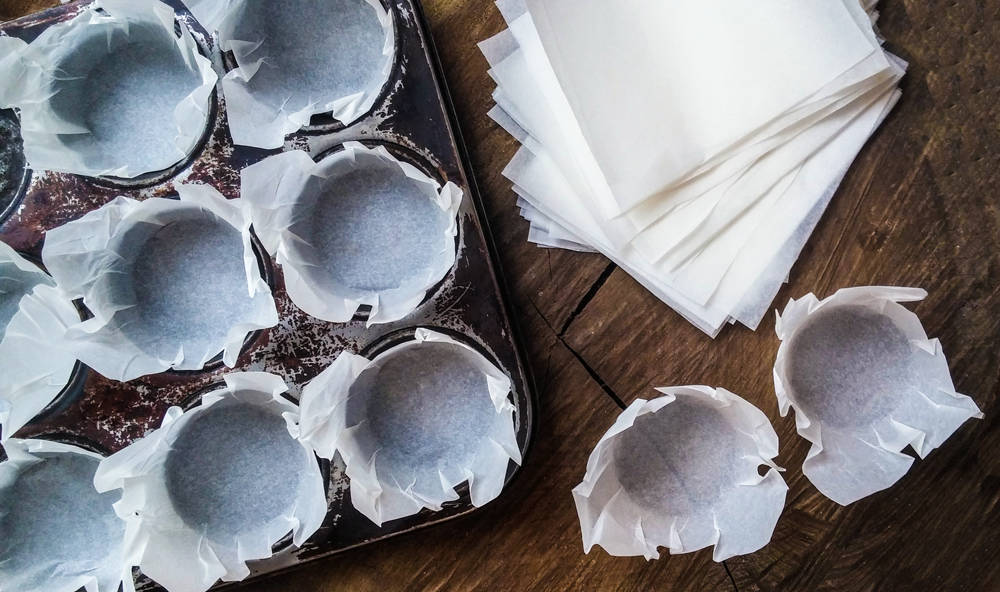
DIY cupcake liners are so simple to make!

I love using them for muffins as well because they give the muffin a fuller and more homemade appearance. It’s also WAY cheaper to make your own cupcake liners.

Marie-Anne Duarte asked me how I make my perfect DIY cupcake liners a few weeks ago, so this one is for you!

I can’t tell you how many times I have baked cupcakes and/or muffins and then, as you get to scooping out the last bit of batter, you realize you are 2 liners short!

This hack takes about 2 minutes from start to finish. In no time at all you will have your very own perfect DIY cupcake liners 🙂


Which Paper Works for Cupcake Liners?

Wax Paper does NOT work for this. It is too thin and a nightmare to get off the actual baked product. You end up peeling it away in shards.

Some of it you can’t even get off at all. Save yourself the hassle and just don’t even attempt to do this with wax paper.

Top quality baking/parchment paper, like GLAD, does not work either. It is TOO non-stick. It is brilliant for lining brownie and cake pans, but not for making DIY cupcake liners. The paper comes right off the cupcake.

What we need is a paper that sticks to the baked product just enough so that it only peels off when you actually peel it off.

In grocery stores and baking stores you will find medium quality baking/parchment paper that is typically brown or white in colour. Brands like Unsgaard and Sylko.

In baking stores, their baking paper is often not even from a particular brand. They buy it in bulk in giant rolls and make their own smaller rolls from it to sell to their clients.

This baking/parchment paper is often non-stick on just one side or not even really non-stick at all. THIS is the paper you need.

Want to add a rustic look to your cupcakes or muffins? Or maybe you've just run out of cupcake liners! Either way, these homemade DIY cupcake liners/cases are exactly what you need. They're quick & easy to make - and super cheap too! Click through to get the full step-by-step tutorial... #cupcakeliners #cupcakecases #cupcakes #homebaking #bakingtips


2 Sides of the Parchment Paper

As I said, some baking/parchment paper has one non-stick side. Make sure that this non-stick side does NOT touch the muffin or cupcake. Otherwise it will slip right off. Make sure the dull side ends up on the inside of your DIY cupcake liners.


1. Cutting Your DIY Cupcake Liners

If you buy your baking/parchment paper in a roll, it makes life super easy. These rolls are generally about 45 cm in width.

  • Place the roll horizontally before you on a counter top. With your ruler placed vertically, measure 13 cm and mark it with a pencil.
  • Fold the paper over. Make sure the sides line up 100%. Look out for your mark.
  • Press down with your one hand, on the mark, and hold it there.
  • Let your other hand slide and press along the paper to create an even fold all the way to the other side. Slide over the fold with your nail again to secure it. You have now folded one long strip that will be turned into 4 DIY cupcake liners.
  • You can fold over the paper again multiple times like an accordion if you need to make lots of liners.
  • Cut the paper along the folds so that you end up with long strips of 13 cm x 45 cm.
  • Place 2 strips precisely on top of each other. Fold them over in half. Press down and secure the fold with your nail. Cut along the closed end so that you have 4 strips of 13 cm x 22,5 cm.

  • Place 4 strips precisely on top of each other. Fold them over in half. Press down and secure the fold with your nail. Cut along the closed end so that you have 8 liners of 13 cm x 11,25 cm.


2. Folding Your Cupcake Cases

You’ll need a muffin/cupcake tin and a cup, measuring cup or ANYTHING that fits snugly into the holes of your tin. For me it is a large bottle of Cerebos Salt. Whatever you are going to use, let’s call it a “squeezer”.

  • Place a single piece of paper over a hole – as centralized as possible. Remember at this point to have the one non-stick side facing DOWN (if you are using a paper with one non-stick side). The non-stick side should not be in contact with the cupcake/muffin.
  • Press down with your squeezer over the paper, into the hole.
  • Roll around the squeezer to force the paper into the bottom of the hole.

  • The “ears” of your DIY cupcake liners will be a bit uneven and random. Use your thumb and index finger to grab each one and flatten it out. Especially the base of each ear. Do this with all 4 ears. You can twist you squeezer to access all the ears. You don’t need to turn the pan every time.
  • Press each ear tightly up against your squeezer.

  • Firmly roll around your squeezer again to really imprint that hole’s shape in the paper.


3. How to Spoon Batter into the Homemade Liners

Now you will notice that the ears of the DIY cupcake liners are facing up. This will give you cupcakes that bake with North, South, East and West points, instead of nice and round. Here’s how you fix that.

  • Spoon your batter into your liners. You need the weight of the batter to keep the liner down.
  • Press down and open up the 4 ears (see image above right).
  • Bake as normal!


Additional Notes

If you used the right paper it will not peel away from the cupcake/muffin by itself. You can lift the baked goods out of the tin by holding onto the ears of the liner – don’t be scared, it won’t pull away.

If you have any questions, please comment below because I would love to help!


Obsessed with Baking PERFECT Cupcakes?

I thought so! Here are 2 blog posts that’ll help you to bake flawless cupcakes every single time:

>> Full Cupcake Troubleshooting – 15 Mistakes and Solutions for Baking PERFECT Cupcakes
>> Advanced Tips for Baking PERFECT Cupcakes Every Time.

Chat soon!

Aurelia 🙂

Plan your Home/Micro Bakery in 1 afternoon. Download this free Home/Micro Bakery Business Plan template to start turning your passion for baking into an income.

Got a question? Something to add? Let’s chat in the comments section down below! (I respond to every single comment)

495 Shares
Grainy Ganache (Broken/Oily/Split) – SAVE it & PREVENT it!

Grainy Ganache (Broken/Oily/Split) – SAVE it & PREVENT it!

Split/Oily/Grainy Ganache – Fix it & Prevent It

Split/Oily/Grainy Ganache can ruin the brightest day.

You’re combining relatively expensive ingredients and hoping for super shiny, luscious awesomeness and then wamp wamp wamp…

It all splits into a greasy, grainy MESS! It totally sucks.

Do you make MORE ganache? But what if it splits again? And the thought of dumping these expensive ingredients in the bin just about burns your soul…

But fear not my friend! You DON’T need to throw out that split, grainy, greasy ganache because – you CAN SAVE it!! And in today’s blog post I’m going to show you how 🙂

On top of that I’m also going to show you all my tips and tricks for PREVENTING chocolate ganache from splitting in the first place.

Let’s do this!

What is Chocolate Ganache?

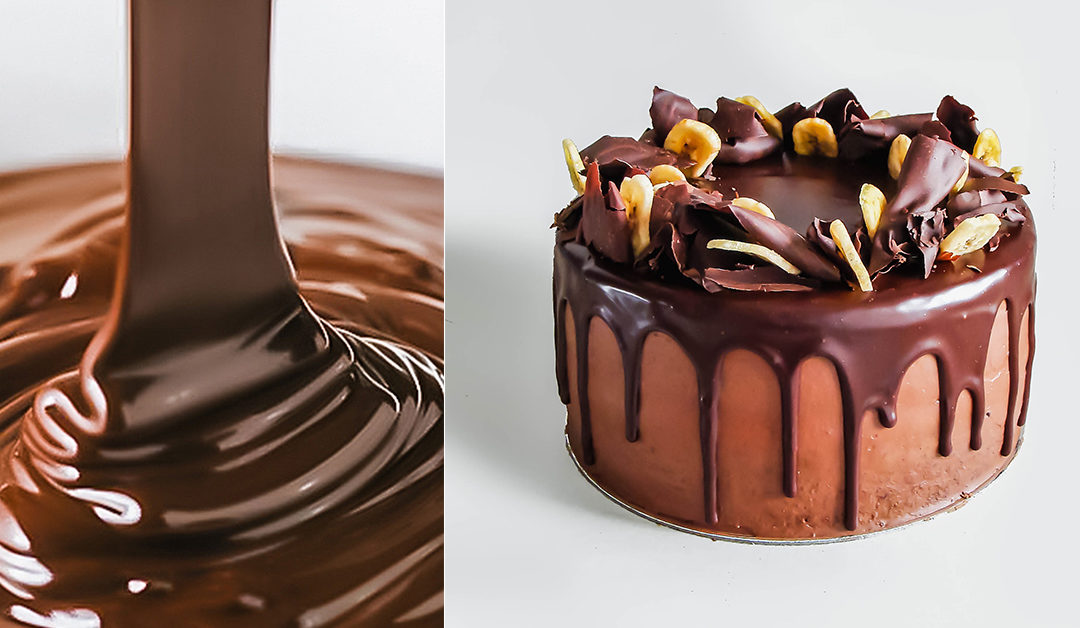
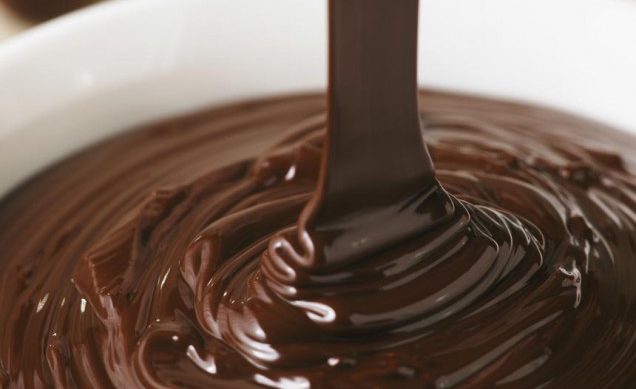
Chocolate ganache is a smooth and shiny mixture of chocolate and cream used in cakes, desserts and pastries. Only 2 Ingredients, but a whole lot of things can cause it to split or break.

Photo: josephcphillips.com

I generally use 65% Dark Chocolate. If I’m making truffles, then a 2:1 ratio of chocolate:cream is best. For covering cakes, or as a filling between cake layers, I use a 1:1 ratio.

White chocolate and Milk Chocolate are naturally softer, so a 3:1 ratio of chocolate:cream for covering cakes. For truffles use a 4:1 ratio.

Whatever your ratio of chocolate to cream is, don’t fuss too much about it. That’s most probably not where you are going wrong.

I’ve found that it’s usually in the method and technique where things go wrong. That’s what splits ganache.

For this post in particular I am going to focus on how to achieve the smoothest, shiniest result which is ideal for covering cakes with or spreading on top of cupcakes.

And most importantly, I’ll share a few tips that are GUARANTEED to save your Broken/Oily/Grainy Ganache!

What Causes Broken/Oily/Split/Grainy Ganache?

Ganache is essentially an emulsion. Remember that word from 7th grade science? It’s when 2 ingredients are mixed together that don’t actually want to be mixed together – oil and water.

Generally, if the temperature of your ganache goes too high, it will cause the fat in the chocolate to separate. This results in a oily/split/grainy ganache. The severity of the graininess will depend on how overheated your cream was.

Now before we get into fixing a broken ganache, there are a few things you can do to prevent it from happening in the first place.

Basic Tips for Preventing Oily/Split/Grainy Ganache:

  1. Do not let the cream boil – only bring it to a simmer. If the cream is too hot it will overheat the fat in the chocolate, causing it to separate.
  2. Don’t let the chocolate overheat. If you make ganache in a microwave, this is KEY. Just 10 seconds too long and boom! The fat in the chocolate separates. For this reason I prefer to heat the cream gently on my stove top. It gives me more control over the heat.
  3. Chop your chocolate very finely. It just makes it easier for the chocolate to melt into the cream.
  4. Stir all you want in the beginning to incorporate the chocolate into the cream. As soon as your chocolate has melted into the cream, the mixture is smooth and fully combined – STOP stirring. The ganache will now begin to set. Just leave it be and let it cool down to the desired consistency. It firms up as it cools down. Avoid putting it in the fridge and let it set at room temperature. The fridge won’t harm it, you will just need to stir to combine the more set ganache with the less set ganache which involves STIRRING. Not good. Plan ahead and let nature take its course.
  5. Choose your heat. Microwave OR stove-top. I once made ganache by heating the cream on the stove, but after I combined it with the chocolate, it started setting too quickly. In a panic I placed the setting ganache in the microwave for 10 seconds and it split into oblivion. Generally I avoid the microwave altogether when I work with chocolate. The rate at which it heats food is just too intense for chocolate in my opinion. A stove gives you so much more control. If I’m in a rush I’ll heat just the CREAM in the Microwave till it’s hot and steamy (but not boiling over) and then add the chocolate to it outside the microwave. The heat from the cream is usually enough to melt the chocolate.

I’ve also found some extra little tips that have made all the difference in my ganache!

Extra Tips for Preventing Oily/Grainy Ganache:

  1. Do not use a plastic bowl. Use a glass bowl. The ganache comes out so much shinier. For about 2 months I made ganache in a plastic bowl and it was dull & slightly grainy every time. I switched back to glass and never had problems again. A glass bowl yields the best results.
  2. Add a bit more sweetness. *It works wonders! This is particularly effective with Dark Chocolate ganache! I usually replace about 15-20% of the dark chocolate with milk chocolate which contains more sugar. If, however, I want the ganache very dark, I simply dissolve sugar into the cream (1 tsp sugar per 100 ml cream) while it’s heating up. I even like dissolving some Milo/Ovaltine powder to the cream which gives the ganache a little malty flavour! Super shiny, super yummy. It works – really!
  3. Do not use a balloon whisk (or wooden spoon for that matter) to stir the ganache. Use a stainless steel spoon instead. I’ve found that a whisk provides too much friction and irritation for the chocolate ganache. It may be a very subjective opinion, but I do find the ganache to be a tad grainy when it sets. A metal spoon is gentler and as a bonus, it incorporates far less air.
  4. Add a tiny bit of sea salt to the cream before heating. This doesn’t make a difference in the texture of the ganache! It just brings out the chocolate’s flavour 🙂

Don't throw out your split chocolate ganache! You can save it and make is 100% smooth & shiny! :D Click through for all the tips you need to fix and prevent split/oily/grainy chocolate ganache. #chocolateganache #splitganache #bakingtips #bakingtipsandtricks

How to Fix Split/Oily/Grainy Chocolate Ganache:

So for some reason that no one knows a ganache can often still break or be slightly grainy even though we really did EVERYTHING right. Good news is that there are a myriad of options available to you! I will list them from most effective to least effective.

  1. The milk fix. Works great on warm ganache that has just split. Place your ganache in a saucepan on the lowest setting and whisk it as bit. In a separate pan (or bowl in the microwave), heat up about ¼ cup skim or low fat milk to simmering point. Dribble little bits of the warm milk into the ganache while constantly whisking with a balloon whisk. This hack is the least strenuous and works extremely well! This hack is perfect for fixing ganache that will be used as a glaze/covering over your cake.
  2. Melt & Stir. I LOVE this hack. It’s perfect for grainy ganache that has cooled down. I especially use it on frozen and thawed ganache (which obviously splits) ALL the time. Place the grainy ganache in a saucepan. Place the saucepan directly on the stove over the lowest heat possible. As it begins to melt, stir it with a balloon whisk. Keep stirring and gently whisking. By the time all the ganache has melted, it will have come together again completely. So amazing!
  3. Add more chocolate. If you just made the ganache and it is still warm, adding some more chopped chocolate can bring it back together quite quickly. I don’t always like this method because it makes the ganache a lot stiffer. If you will be using the ganache underneath fondant or for truffles, a stiffer ganache won’t be a problem.
  4. Add more cream. Heat about 2 Tbsp of cream till it begins to steam slightly. Turn off the heat and whisk your broken ganache into the cream little by little till everything is once again incorporated, smooth and glossy.
  5. Blending or whisking. Many people recommend this technique across the web. By whisking the mixture together at a high speed you will force the fat and water to combine. I have tried this technique many times, but it has not worked for me. The ganache often does smoothen out initially, but as it sets again, you end up with an at least slightly grainy ganache.

If you want to read more posts on chocolate ganache, here are my favourites:

Want More Chocolate Tips & Tricks?

Then you’ll LOVE these posts:

🍫 How to Make Luscious Dark Chocolate Shavings/Curls

🍫 The Easy, Foolproof Way to Temper Chocolate

🍫 How to Write on Cake with Chocolate

👉 Want to SELL your home baked goods so you can do what you love for an income?

In this YouTube video you’ll learn exactly how to start your own Home Bakery Business – even if you don’t have time, a large kitchen, or starting capital!
 

There you have it! If you have any other questions or struggles with grainy ganache, please comment below because I would love to help!

Chat soon!

Aurelia 🙂

Plan your Home/Micro Bakery in 1 afternoon. Download this free Home/Micro Bakery Business Plan template to start turning your passion for baking into an income.

Got a question? Something to add? Let’s chat in the comments section down below! (I respond to every single comment)

370 Shares
X